Full colour change
Every painted panel, plus door jambs if you want the illusion complete. Satin, gloss, matte, colour shift and textured finishes are all on the table.
Vehicle wraps
Cast vinyl over your factory finish in Tempe. Reversible, protective of what is underneath, and a fraction of what a respray costs.
What a wrap is
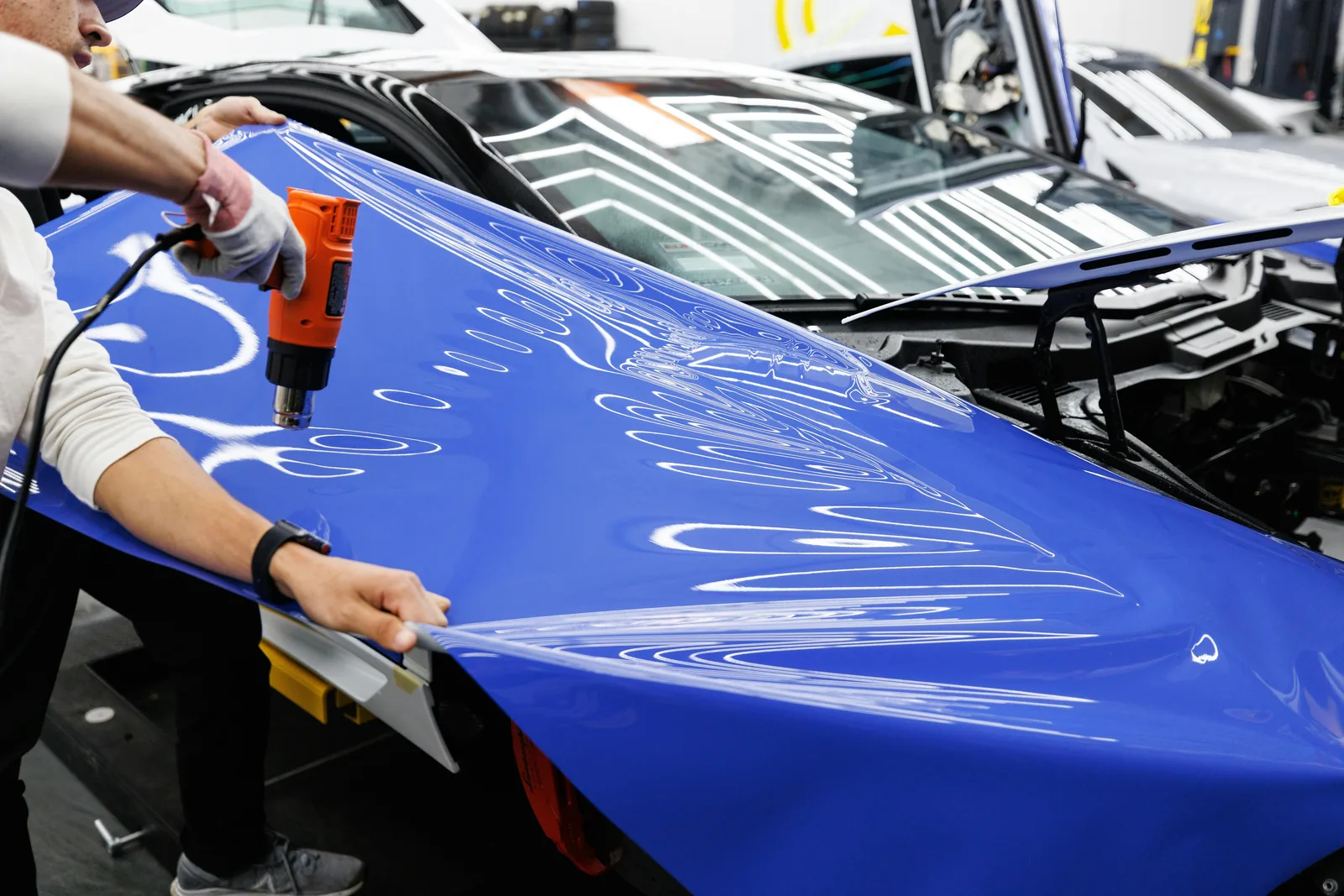
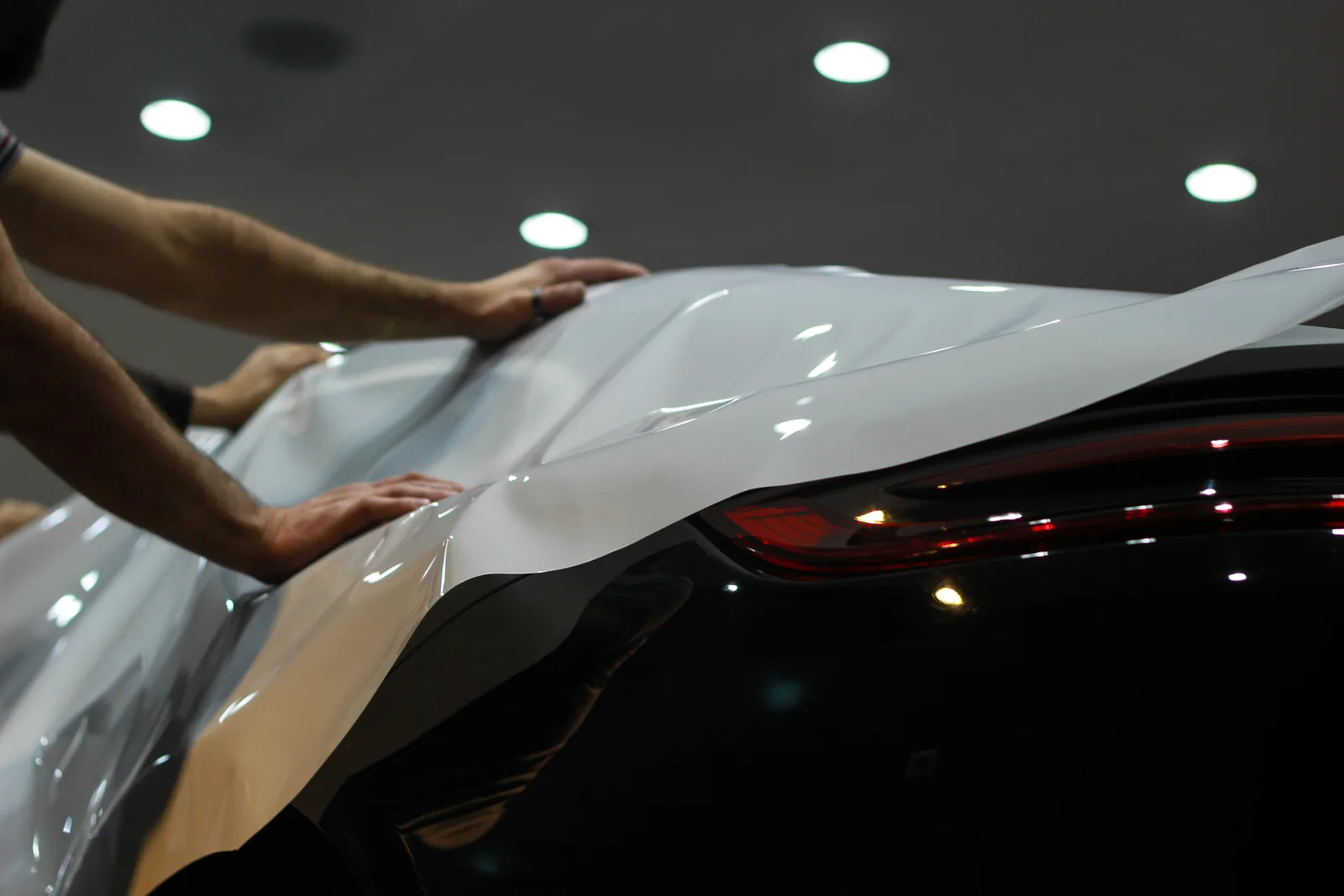
A wrap is a sheet of cast vinyl laid over your existing panels, heated so it conforms to every curve and recess, then trimmed and tucked at the edges. Done properly it reads as paint from two feet away.
Two things follow from that. The first is that your original finish is still there underneath, shielded from rock chips and from the ultraviolet that fades Arizona paint faster than almost anywhere in the country. The second is that it comes off. When you sell the car, or you get tired of the colour, the film is removed and the paint below is the paint you started with.
Cast film is the material that makes this work. It is manufactured to a stable thickness rather than stretched into shape, so it does not creep back toward its original dimensions after it has been heated over a mirror housing or a bumper crease.
Options
Every painted panel, plus door jambs if you want the illusion complete. Satin, gloss, matte, colour shift and textured finishes are all on the table.
Roof, hood, mirrors, spoiler, racing stripes. The cheapest way to change how a car reads without committing the whole body.
Window surrounds, grille slats and badges taken from bright chrome to gloss or satin black. Small job, large difference.
Custom artwork printed and laminated, then installed panel by panel. Personal builds, show cars and anything that needs to be one of one.
Old film, failed film or somebody else's work taken off cleanly, adhesive residue included, ready for fresh vinyl or for sale.
Vans, box trucks, trailers and whole fleets, designed and installed as one consistent set.
Fleet graphics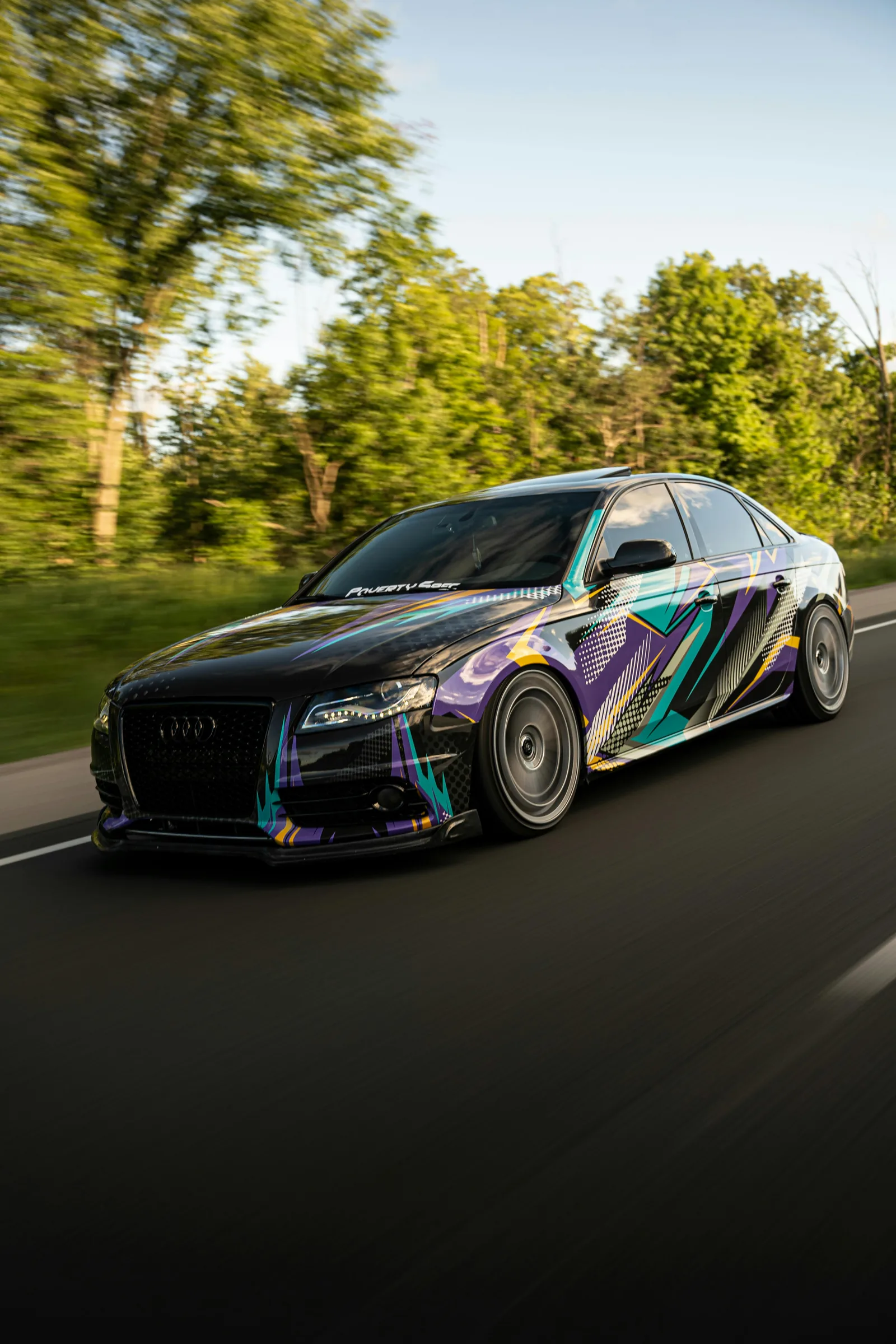
The process
We need the year, make, model and body style, and a clear idea of coverage. Odd bodywork, aftermarket kits and prior wraps all change the number.
You see real samples in daylight. Screens lie about satin and colour shift, so nothing is chosen from a photograph.
Handles, badges, lights and trim come off where they should. Vinyl laid over a part that should have been removed is the single most common reason a wrap fails early.
Panel by panel, indoors, out of the dust and the sun. Recesses are heated and post-heated so the film holds its new shape instead of pulling back out.
The car sits before it goes home. Leave it dry for a couple of days afterwards and keep automatic car washes away from fresh edges.
Questions
Less than the manufacturer's national figure, and anyone who tells you otherwise has not worked here through a July. Horizontal surfaces take the worst of it because they face the sun all day. A garaged car with a quality cast film holds up for years; a car that lives in an uncovered lot at Sky Harbor ages considerably faster on the roof and hood than on the doors.
Healthy factory paint, no. The film protects it. The risk sits with paint that was already compromised before we started: a previous respray, a panel with poor adhesion, or existing chips and lifting clear coat. We inspect and tell you before anything goes on, because vinyl removal will find those weaknesses.
No. The old film comes off first. Layering vinyl traps air, doubles the thickness at every edge, and makes the eventual removal considerably worse for whoever does it.
By hand, with a pH-neutral soap, and not in direct sun. Keep pressure washers well back and never aim one straight at an edge or a seam. Brush-style automatic washes are the fastest way to lift a corner.
Year, make, model, and the finish you have in mind. That is enough for a real number.