Ceramic
The one worth paying for in this climate. Nano-ceramic particles block infrared without going metallic, so it rejects serious heat at a shade you can still see out of, and it will not interfere with your phone, keyless entry or radio.
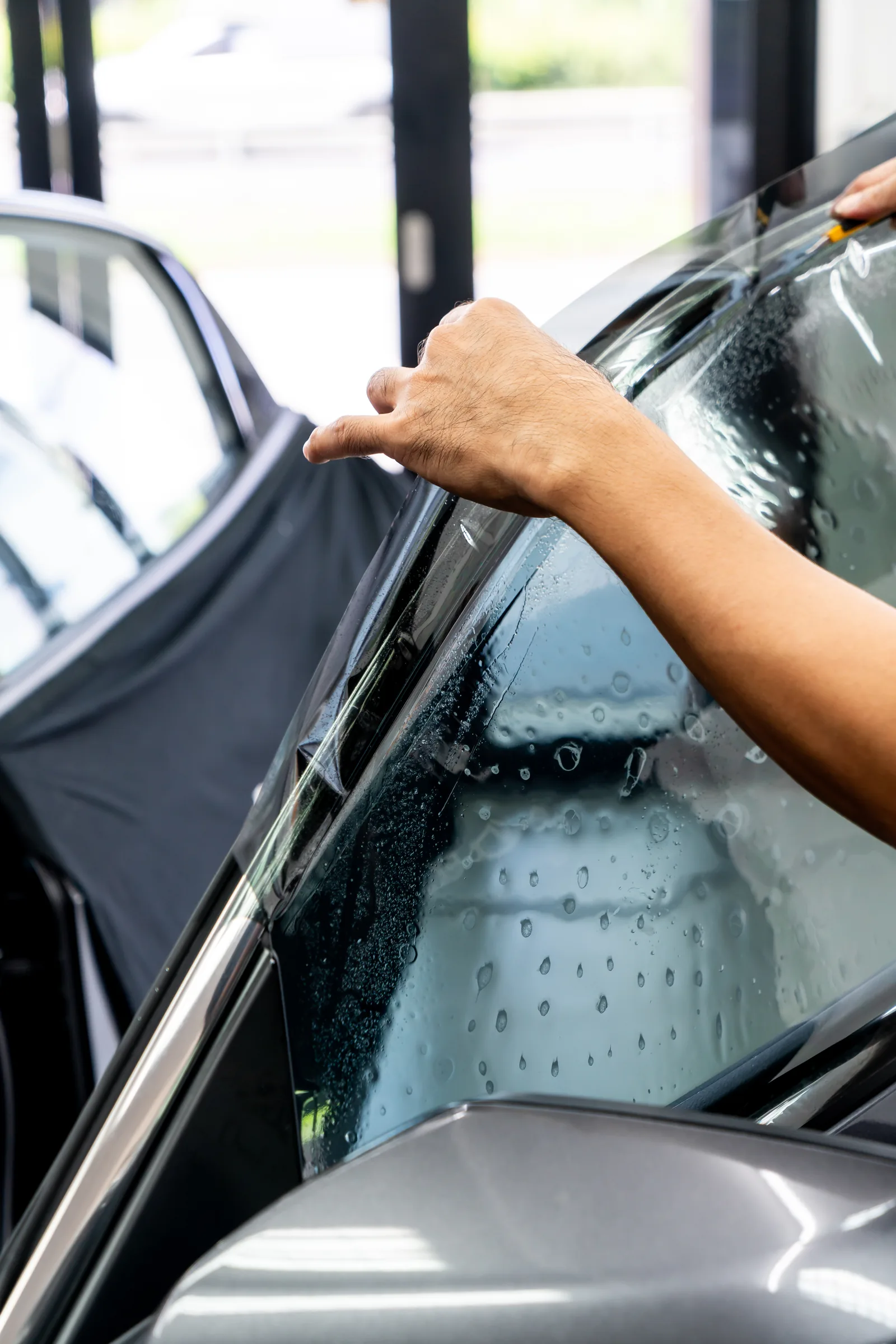
Window tinting
Ceramic and carbon film cut to your vehicle in Tempe. Installed to Arizona's legal limits, and chosen for what it does to cabin temperature rather than only how dark it looks.
The number that matters
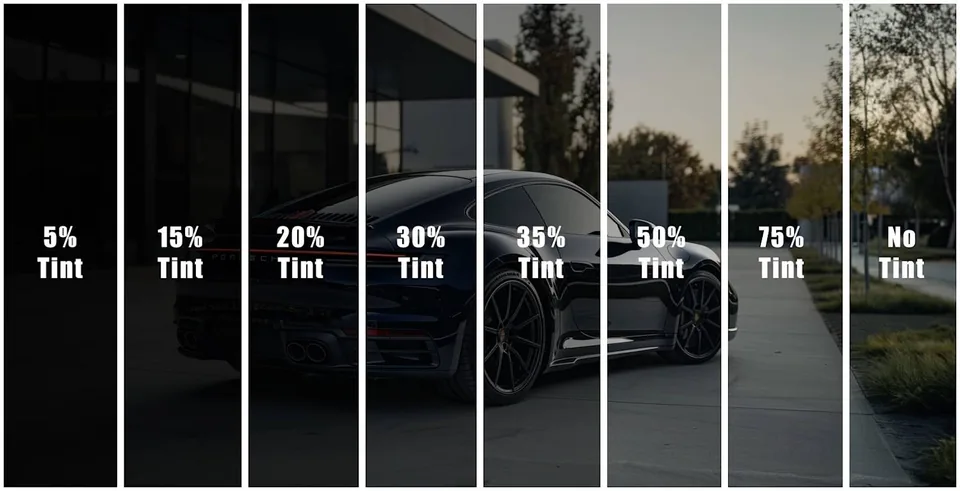
People walk in asking for 5 percent because they want a cool car. Those are two different specifications. How dark a film looks is its visible light transmission. How much heat it stops is a separate figure driven by what the film is made of, and a cheap dyed film at 5 percent can let more heat through than a good ceramic at 35.
Lower percentage means less light through the glass. Arizona sets its own limits per window position, and we install to them.
Films
The one worth paying for in this climate. Nano-ceramic particles block infrared without going metallic, so it rejects serious heat at a shade you can still see out of, and it will not interfere with your phone, keyless entry or radio.
A solid middle option. Good heat performance, a flat black look that does not turn purple over time the way old dyed films did, and no signal interference.
A band across the top of the windshield, cutting the low sun on an eastbound morning commute without touching your line of sight.
Bubbled, purpled or peeling film taken off along with the adhesive. Old rear glass with defroster lines needs patience here, and that is exactly where a rushed job destroys them.
Flat glass film for residential and commercial windows. Same heat problem, larger panes, and a west-facing room in July is the clearest demonstration of what film does.
Frosted and blackout film for offices and storefronts, plus thicker safety film that holds glass together if it breaks.
Arizona specifics
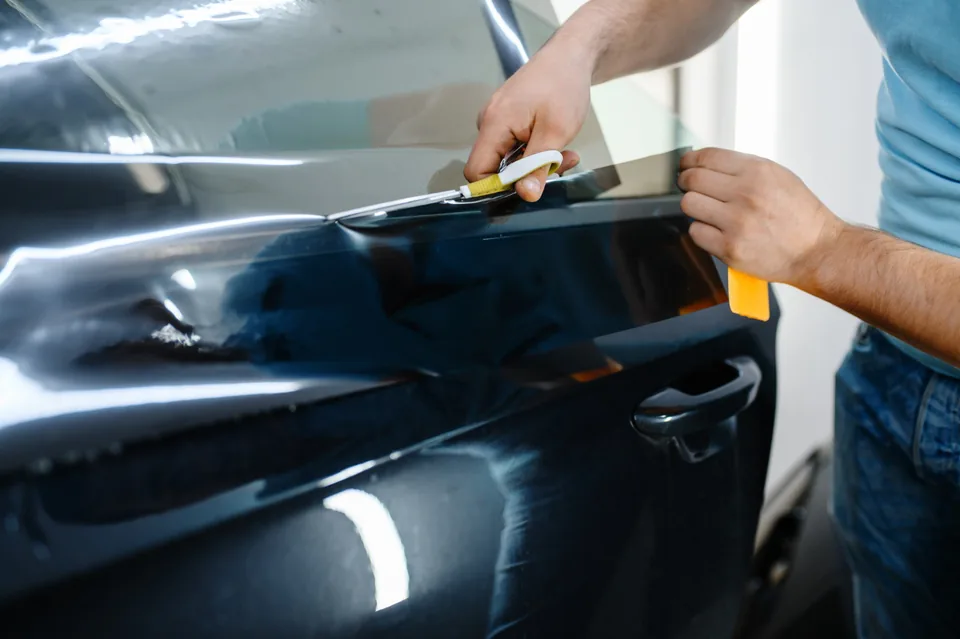
Film is installed wet. What you see for the first few days is that moisture working its way out through the film, which is why a fresh install can look hazy or show small water pockets. It clears on its own.
Low desert humidity actually helps this, and a car left in the sun cures faster than one parked in a garage. The trade-off is that low humidity also means dust, and dust is the enemy of a clean install, so the work happens indoors in a controlled bay rather than a driveway.
Leave the windows up for the first few days. Rolling down a door glass before the film has bonded is the single most common way a customer damages their own tint.
Tint questions
Arizona regulates each window position differently, and the front side windows are the ones that catch people out. Rear glass is treated far more permissively than the front. We install to the current state limits and will tell you plainly if what you are asking for would put you outside them. If you want to check the letter of it yourself, the Arizona Department of Public Safety publishes the standard.
Around two to four hours for a typical vehicle, depending on how many windows and how awkward the glass is. Steeply curved rear windows and frameless doors take longer than a square four-door.
Give it a couple of days at minimum. In summer heat it bonds faster than in winter. We will tell you at handover what to expect for the vehicle and the time of year.
Because it was dyed film, and the dye broke down under ultraviolet exposure. That is a material problem, not an installation one, and no amount of care prevents it. Carbon and ceramic films do not have dye to lose, which is why they hold their colour.
Yes, on our tinting work. Terms depend on the film you choose, so ask when you book and we will put the specifics in writing with your quote.
Tell us the vehicle and which windows. We will recommend a film and a shade that keeps you legal.